The Evolution of Australia's New Vehicle Efficiency Standard (NVES)
UPDATE: The New Vehicle Efficiency Standard is now law. For the latest compliance dates and fleet impacts, read our updated guide here.
New standards for vehicle fuel efficiency are expected to arrive in 2025. Here’s how they could impact your fleet.
The Federal Government has introduced a New Vehicle Efficiency Standard (NVES) as part of the National Electric Vehicle Strategy announced in April 2023. The strategy aims to increase the uptake of electric vehicles (EVs) in Australia and reduce carbon emissions to improve wellbeing. The NVES is just one of several initiatives, including the recent luxury car tax changes, that will impact fleet operators.
Though the NVES is yet to pass parliament, it's expected to take effect from 1 January 2025. This gives organisations the better part of a year to determine how this may impact business goals and needs. Read on to see how you can make the most of the potential upcoming changes.
What is the New Vehicle Efficiency Standard?
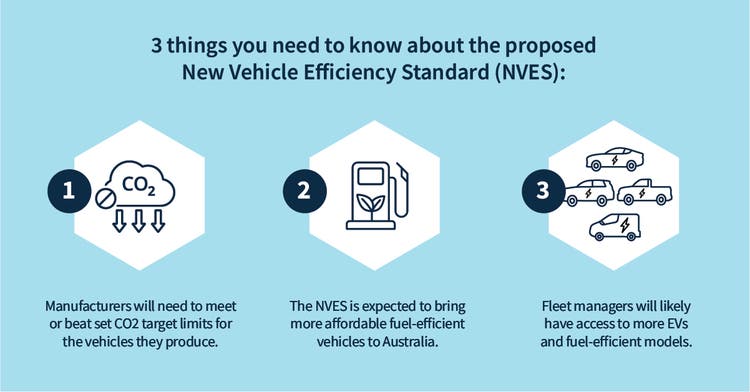
The NVES provides incentive for vehicle manufacturers to supply new cars that are more fuel-efficient. Manufacturers need to meet or exceed set average CO2 targets (limits) for the vehicles they produce. The standard proposes to also reduce the target limits over time to encourage manufacturers to continue transitioning to more fuel-efficient vehicles.
Why introduce the NVES?
The primary goal for the NVES is to improve the fuel efficiency of all new cars – petrol, diesel, electric, hybrid – in Australia. Currently, vehicle manufacturers are sending their most efficient vehicles to other countries with existing fuel efficiency standards. For example, new passenger cars in Australia use an average of 20% more petrol than in the US. There are also around 150 electric and plug-in hybrid vehicles available in the US but less than 100 currently available in Australia.
This NVES is the Government’s attempt to encourage vehicle manufacturers to bring more affordable EVs to Australia – reducing overall emissions while offering more choice. The proposed policy will provide around $17,000 in savings per new vehicle, over the life of the vehicle.
UPDATE: The New Vehicle Efficiency Standard is now law. For the latest compliance dates and fleet impacts, read our updated guide here.
What does this mean for my fleet?
The NVES could impact fleet operations in several ways, including:
- Price changes – the emissions targets and associated penalties may result in some manufacturers passing on costs through higher prices for less fuel-efficient car models. Other manufacturers with primarily EVs or hybrids in their fleet may utilise their credits to make their cars more affordable and encourage consumers to buy more fuel efficient vehicles.
- Vehicle model range – penalty costs for vehicles that don’t meet targets could lead to manufacturers discontinuing certain models altogether. However, with more hybrid and electric models available, fleet managers will have access to more EV options.
- Greater choice for commercial fleets – The proposed NVES includes light commercial/delivery vans with a gross vehicle mass up to 4.5 tonnes. This also means there’s likely to be more options available for commercial vans.
UPDATE: The New Vehicle Efficiency Standard is now law. For the latest compliance dates and fleet impacts, read our updated guide here.
How can organisations prepare for these new standards?
The proposed NVES only applies to new vehicles and therefore shouldn't impact existing fleets. However, it’s likely to influence your fleet vehicle purchase or lease plans. Here's what you can do to prepare:
- Keep up to date on the progress of the proposed NVES to see where it lands. There are currently three options for emissions targets on the table for consultation – slow start, fast but flexible and fast start. The Government’s preferred option is fast but flexible, which seeks to catch up with the US fuel efficiency standards around 2028.
- The NVES is expected to result in more EVs and fuel-efficient vehicle options. You might want to look at your current fleet composition in light of the proposed changes and consider what it could look like in the future. At Interleasing, we’ve developed a 3-step framework to help organisations transition to EVs. You can download the roadmap to help guide your fleet transition here.
- Review your fleet budgeting to understand the potential impact on upfront costs and costs over time.
By staying on top of the upcoming changes, fleet managers can make future-focused fleet management decisions. For more on how to develop a well-informed fleet composition strategy, get in touch today.