Meet the Experts: Nathan Harbridge, National Manager Maintenance Control
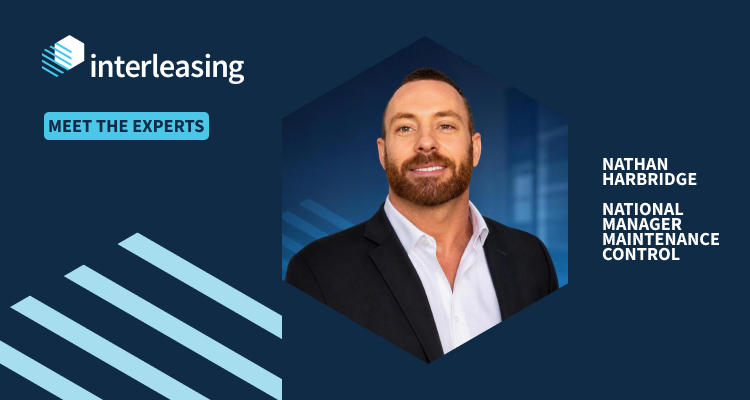
With 15 years’ experience spanning workshop floors to strategic fleet management, Nathan Harbridge brings a practical, hands-on perspective to helping organisations optimise their fleets. Having started his career as a heavy vehicle mechanic before progressing into leadership and fleet roles, Nathan understands both the operational realities and the broader business impact of effective fleet management. Today, he works closely with clients to help reduce downtime, improve efficiency and ensure vehicles remain safe, reliable and fit for purpose.
How long have you been working in fleet solutions or asset finance?
I’ve been in the fleet industry for 15 years overall, including 9 years with Interleasing. Before that, I worked with another fleet company and earlier in my career I was a heavy vehicle mechanic for about nine years.
What brought you into the fleet industry?
I wanted a change of pace. I knew from an early age that I didn’t want to be on the tools forever. I moved into leadership roles pretty quickly and naturally progressed into a position where I could apply that experience in a broader way through fleet.
What does your current role entail?
My role is focused on helping clients address fleet inefficiencies. That includes reducing operational costs while maintaining a high level of safety and compliance, minimising vehicle downtime, and ultimately optimising overall fleet performance.
What excites you about your role?
I like being in a preventative space rather than a reactive one. If we can analyse client data, identify patterns and proactively solve issues before they happen, it reduces breakdowns and keeps fleets operating efficiently.
Can you give an example of where that approach makes a difference?
A lot of our clients, particularly in the disability sector, rely heavily on their vehicles. If a vehicle breaks down, it’s not just an inconvenience- it impacts people who depend on those vehicles to get to medical or social appointments. For me, it’s about avoiding those situations altogether by being proactive.
What are some recurring challenges you’re seeing for clients?
A big challenge at the moment is lead times for servicing and repairs. It can take several weeks to secure a booking, largely due to a shortage of skilled mechanics. That puts pressure on fleet availability and requires a strong, proactive approach to maintenance scheduling.
How do you help clients manage that challenge?
It comes down to strong relationships with our supply network and being proactive with service planning. We work closely with both dealership networks and national service providers to help ensure our clients get priority access, competitive pricing and consistent service.
What are the biggest opportunities for fleet managers in the next 12 months?
Using data more effectively-particularly through AI and predictive analytics is a big opportunity. We’ve never had more data available, and we should be using it to identify trends and predict potential failures before they occur.
Can you give an example of predictive maintenance?
If we know that a particular component tends to fail at a certain point in a vehicle’s lifecycle, it’s more cost-effective to replace it proactively rather than wait for it to fail. That avoids downtime, reduces costs and prevents operational disruption.
Are there any other trends you’re seeing in the industry?
The transition to EV is a big one, especially with rising fuel costs and ESG targets. But it’s not a one-size-fits-all solution. Some clients need a mix of EV, hybrid and ICE vehicles depending on their operational requirements. It’s about finding the right balance for each organisation.
What’s your view on new vehicle brands entering the market?
It’s evolving quickly. Some of the newer brands are building a solid reputation, and overall the increased competition is positive. It should help drive better pricing and more choice for customers over time.
What makes Interleasing different?
Our customers are not numbers. We understand how their businesses operate and how our services impact their day-to-day operations. Whether a client has 10 vehicles or 300, they’re treated the same.
How does that translate into the client experience?
It means taking ownership. The first person a client speaks to should be able to help and ensure their enquiry is handled properly. Clients don’t want to be passed around-they want confidence that their issue is being addressed.
What was your first job and what did you take away from that experience?
I worked at McDonald’s at the Sydney domestic airport.
It taught me a strong work ethic from a young age. It was fast-paced and high-pressure, especially when large groups of passengers came through at once. It taught consistency, professionalism and how to perform under pressure.
What inspires you and what do you enjoy doing outside of work?
Continuous growth and new experiences. I like being around people who challenge me to be better. I enjoy travelling and going to the gym. It’s a good way to stay consistent, manage stress and keep accountable to my health.